Exagen Raises $58 Million From IPO

Exagen Raises $58 Million From IPO

Exagen Inc. (Vista, CA) completed an IPO on September 23, raising gross proceeds of $58 million from the sale of 4.14 million shares at $14 per share. Net proceeds were approximately $54 million after deducting the underwriting discounts and commissions and other IPO expenses.
Cowen, Cantor Fitzgerald and William Blair managed the IPO.

Exagen operates an 8,000-square-foot CAP-accredited lab in southern California. The company’s main product is a laboratory-developed test named AVISE CTD that was commercially launched in 2012. AVISE CTD is a blood test panel that can help doctors diagnose lupus, an autoimmune
disease that occurs when your body’s immune system attacks its own tissues and organs.

Exagen has a total of about 150 employees, including 55 sales reps who market AVISE CTD to 5,000 rheumatologists across the United States. Under an exclusive agreement, Exagen’s reps also market Janssen’s drug Simponi for the treatment of adult patients with moderate to severe rheumatic arthritis.

In the six months ended June 30, 2019, Exagen recorded a net loss of $9.8 million, unchanged from the same period a year earlier; revenue was up 35% to $19.7 million; and average reimbursement per AVISE CTD test increased by 5% to approximately $325 per test. The company has
accumulated total losses of $158 million since being formed in 2002.

Harbert Pushes For Change At Enzo

Harbert Pushes For Change At Enzo

Harbert Pushes For Change At Enzo

Funds managed by Harbert Management Corp. (HMC-Birmingham, AL) have purchased an 11.8% equity stake in Enzo Biochem Inc. (New York City) and nominated two new independent directors—Fabian Blank and Peter Clemens—to Enzo’s board. Enzo currently has a fivemember board and the next annual shareholders meeting will take place in early January 2021.

In a September 17 letter to Enzo’s shareholders, Harbert said, “For decades, Enzo has operated as a ‘lifestyle business,’ where management has seemingly placed its own personal and financial interests ahead of its shareholders’ best interests.” Harbert noted that Elazar Rabbani, PhD, age
75, has served as Enzo’s Chairman and CEO since he founded the company in 1976, while his brother in-law Barry Weiner, 68, is President, CFO and board member.

Over the past 10 years (ended August 31), Enzo’s total shareholder return has been -36% versus +199% for the Russell 2000 Index of small cap stocks and +337% for its peer group of lab and biotech companies, according to Harbert. In addition, Harbert notes that Enzo has reported operating losses every year since 2004, with cumulative negative operating income of $180 million, excluding legal expenses and settlements.

Harbert wants Enzo to sell its drug development division as well as non-core patents in its diagnostic products division.

Harbert says Enzo should focus on its clinical lab division, which operates a 44,000 square-foot lab in Long Island and 30 PSCs in New York and New Jersey. Focusing on the densely populated New York City area and prudently cutting costs could return Enzo’s lab segment to profitability,
according to Harbert.

In the nine months ended April 30, 2019, Enzo’s clinical lab division recorded an operating loss of $13.3 million versus operating income of $2.7 million for the same period a year earlier; revenue fell by 32% to $38 million as a result of pricing pressure related to PAMA and lower genetic testing volume due to increased competition.

uBiome Headed For Chapter 7 Liquidation

uBiome Headed For Chapter 7 Liquidation

uBiome Headed For Chapter 7 Liquidation

UBiome Inc. (San Francisco), which filed for Chapter 11 bankruptcy reorganization in early September, has moved to a liquidation under Chapter 7, after unsuccessful attempts to secure new loans or find a buyer.

The company was founded in 2012 and had marketed its top-selling SmartGut test directly to consumers by email and online ads. Patient test orders were signed off by remote physicians via a telemedicine service. SmartGut is a stool test that costs $2,970 and purportedly identifies microbes in the gut for patients with chronic gut conditions such as irritable bowel syndrome and Crohn’s Disease.

In late April, the FBI raided uBiome’s headquarters to investigate allegations that the company may have billed insurers using inaccurate codes to increase the likelihood of coverage and higher reimbursement. More recently, it’s come to light that the patient database used to validate Smart-Gut was populated by samples volunteered by employees and participants in an online fundraiser and were tainted by a number of specimens taken from infants and pets.

Laboratory Economics Issues Research Report on U.S. Anatomic Pathology Market

Laboratory Economics Issues Research Report on U.S. Anatomic Pathology Market

Laboratory Economics Issues Research Report on U.S. Anatomic Pathology Market

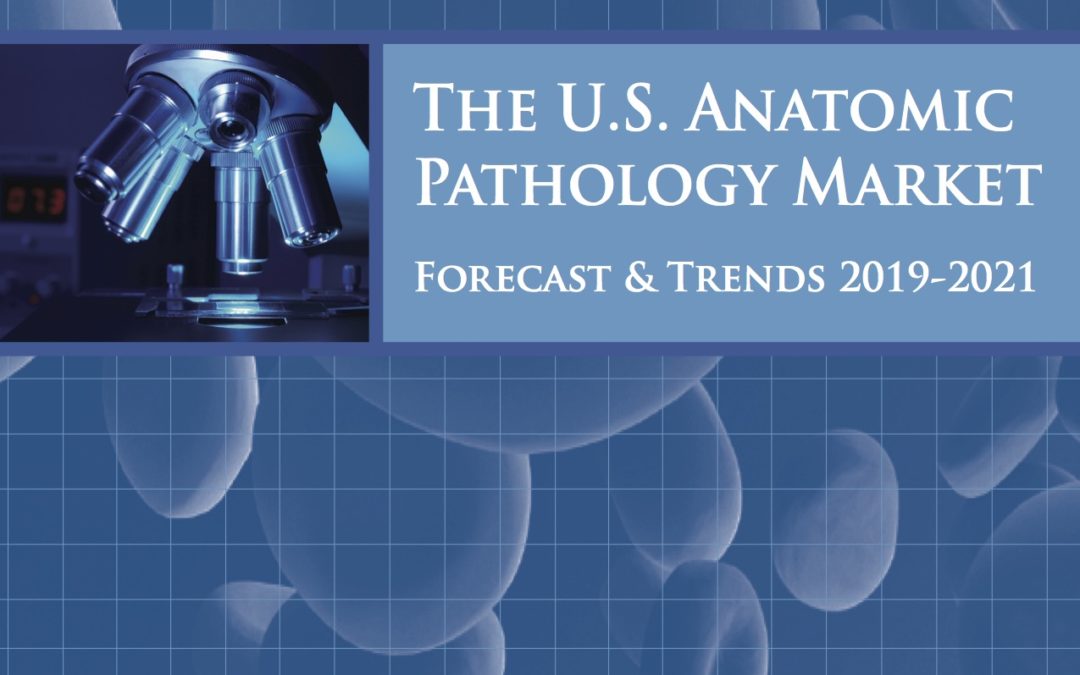
The publisher of Laboratory Economics has just released The U.S. Anatomic Pathology Market: Forecast & Trends 2019-2021. With this special report, you can tap into 150 pages of proprietary market research that reveals critical data and information about key business trends affecting the anatomic pathology market.

The report reveals that the anatomic pathology market (including Pap testing) now represents an estimated $18 billion of revenue with an annual growth rate of 3-4%. All data and trends are fully explained throughout the report, including 10-year historical data and a detailed three-year forecast.

The U.S. anatomic pathology market endured intense reimbursement pressure between 2013 and 2017. “However, the Medicare program has completed its evaluation of payment rates for all the key pathology codes and the reimbursement environment now appears stable,” according to Jondavid Klipp, Publisher of Laboratory Economics. “Furthermore, the introduction of new higher-priced molecular oncology tests linked to targeted cancer drugs is driving volume trends higher. As a result, the outlook for the U.S. anatomic pathology market is the best it’s been in the past 10 years.”

The report includes:

  • More than 100 charts and graphs
  • Industry size and growth rates
  • Detailed estimates for market subsets like prostate cancer testing, dermatopathology, lymphoma/leukemia and gastrointestinal
    pathology
  • Medicare claims data for 60 key pathology codes
  • Cervical cancer testing trends and pricing data
  • In-office histology lab trends
  • Detailed analysis of the digital pathology market
  • Results from Laboratory Economics’ exclusive Anatomic Pathology
    and Clinical Lab Trends Surveys from 2007 through 2019

Anatomic pathology companies featured in this report include: Aurora Diagnostics, Bako Diagnostics, CellNetix Labs, Exact Sciences, Genomic Health, InformDX, LabCorp/Dianon, Myriad Genetics, Mayo Clinic Labs, NeoGenomics, OPKO/BioReference Labs, PathGroup, Pathology Reference Laboratory, Poplar Healthcare, ProPath Services, Quest Diagnostics/AmeriPath and Sonic Healthcare USA.

The U.S. Anatomic Pathology Market: Forecast & Trends 2019-2021 is published by Laboratory Economics (www.laboratoryeconomics.com), an independent market research firm focused exclusively on the business of pathology and laboratory medicine.

Contact Information
Contact: Jondavid Klipp, President
Laboratory Economics
195 Kingwood Park
Poughkeepsie, NY 12601
Phone: 845-463-0080
www.laboratoryeconomics.com

A Closer Look At The Exact Sciences-Genomic Health Deal

A Closer Look At The Exact Sciences-Genomic Health Deal

A Closer Look At The Exact Sciences-Genomic Health Deal

Last month, Laboratory Economics took an abbreviated look at Exact Sciences’ blockbuster deal to acquire Genomic Health. Below we provide a more in-depth review of some of the interesting aspects of the agreement.

The Bidding Process
In October 2017, Genomic Health commenced, with the assistance of Goldman Sachs, a search for a potential buyer. Goldman contacted a total of 27 entities, including Exact Sciences. Sixteen of the parties contacted, including Exact Sciences, entered into confidentiality

 agreements and received management presentations by Genomic Health. Two parties offered preliminary bids, with one indicating a price range of $32 to $35 per share and the other at a range of $38.50 to $39.50 per share. These bids valued Genomic Health at approximately $1.2 billion.

Exact Sciences was not one of the bidders. Laboratory Economics speculates that the unnamed bidders might have included LabCorp, Quest Diagnostics, Myriad Genetics or Roche. In any case, following completion of due diligence, no final offers were made and the process ended without a
deal in February 2018.

Meanwhile, a little over a year later, Exact’s CEO Kevin Conroy had a change of heart and contacted Kim Popovits, Chairman and CEO of Genomic Health. At a dinner meeting with Popovits on J

une 13, Conroy proposed to acquire Genomic Health for $64 per share.

Conroy’s initial offer was rejected, but after a few weeks of haggling, Exact agreed to pay $72 per share, or approximately $2.78 billion, comprised of $1.06 billion of cash and $1.72 billion of Exact Sciences’ stock. The agreement was finalized late in the evening on July 28 and publicly

announced the next day.

Extraordinary Valuation
The deal is expected to be completed by the end of 2019. The purchase price works out to be $2.54 billion, after accounting for $244 million of cash and securities that Genomic Health has on its balance sheet. At $2.54 billion, Exact Sciences is paying 5.6x for Gen

omic Health management’s forecast revenue of $452 million in 2019, 34x its forecast EBITDA of $74 million, and 65x its forecast free cash flow of $39 million.

Golden Parachutes
Completion of the sale to Exact Sciences will trigger executive severance plan payments (i.e., golden parachutes) for Genomic Health’s top executives. For example, Popovits will receive a severance package of cash and vested options and restricted stock worth $13.4 million. Genomic Health’s Frederic Pla, PhD, Chief Operating Officer, will receive a package worth $5.7 million, and CFO Brad Cole will get $5.3 million.

Minimal Cost Synergies
Exact’s Conroy has described the combination of the two companies
as a “1+1=3” situation. But financial projections contained in Exact Sciences SEC filing for the transaction project pretax operating synergies of only $8 million in 2020, $17 million in 2021, and $25 million annually thereafter.

These projected cost savings represent only 2% of the operating expenses at the combined companies and are comprised mainly of the elimination of public company costs at Genomic Health, including job cuts at the C-suite executive level.

The combined company is projected to become free cash flow positive in 2021.

Longer Term R&D Benefits
The addition of Genomic Health and its flagship OncoTypeDx test will help Exact Sciences diversify its business, now entirely dependent on its Cologuard colorectal cancer screening test.

Longer term, Katherine Tynan, PhD, President of Tynan Consulting LLC (San Francisco, CA), believes that Genomic Health’s very sophisticated R&D team and access to specialty oncologist channels may accelerate Exact Sciences’ development and commercial launch of new cancer tests. For example, over the past 20 years, Genomic Health has completed 125 clinical studies, covering multiple indications and been published in 156 peer-reviewed journal articles.

At the recent Baird Global Healthcare Conference, Exact’s CFO Jeffrey Elliot noted that Genomic Health employs 100 sales reps that market directly to oncologists in the United States. “They’ll enhance our ability to collect patient samples more rapidly….Patient samples are the biggest rate limiter to developing new diagnostic tests. You need samples to design your test and verify that it works,” explained Elliot.

New tests under development at Exact Sciences include a blood-based test panel of six DNA biomarkers designed to detect liver cancer for those at highest risk—people with hepatitis B or cirrhosis. Exact hopes to launch an LDT version of the test next year.

The Potential for a Liquid Biopsy for Colorectal Cancer
There are at least 13 companies that have developed or are developing liquid biopsy tests based on the detection of biomarkers in the blood (e.g., CellMax Life, Epigenomics AG, Freenome Inc., GRAIL Inc., et al.).

For example, Epigenomics AG received FDA approval for its liquid biopsy screening test for colorectal cancer, Epi proColon (Septin 9), in April 2016, and began offering the test commercially in May 2016. However, Tynan notes that the company has had a number of challenges, including PAMA,
on the way to payment and market access (CPT 81327: Medicare rate of $192). “They haven’t established intimacy with physicians and payers as the test is a distributed IVD, and the big commercial labs are difficult channels to raise awareness for new tests entering the market,” notes Tynan.

The real question is whether blood-based DNA analysis is a viable tool to enhance detection of advanced adenomas (precancerous lesions), according to Tynan. “Currently the literature suggests that benign colon lesions display extensive genetic heterogeneity, that they are not prone to release DNA into the circulation and are unlikely to be reliably detected with liquid biopsies, at least with the current technologies,” she adds.

Given these performance and evidentiary challenges, Tynan believes that FIT, colonoscopy, Cologuard and to a much lesser extent Epi proColon are likely to remain the only options for colorectal cancer screening for the foreseeable future.

PAMA Rate Adjustments Looming In 2021
As a final note, Laboratory Economics wonders if the second PAMA Medicare rate adjustment cycle motivated either Genomic Health or Exact Sciences to jump into each other’s arms. The privatepayer data collection period (January 1 through June 30, 2019) is over, so both companies have a
very good idea of where Medicare rates for their proprietary tests will be set for 2021-2023. CMS is scheduled to announce the new rates next summer.